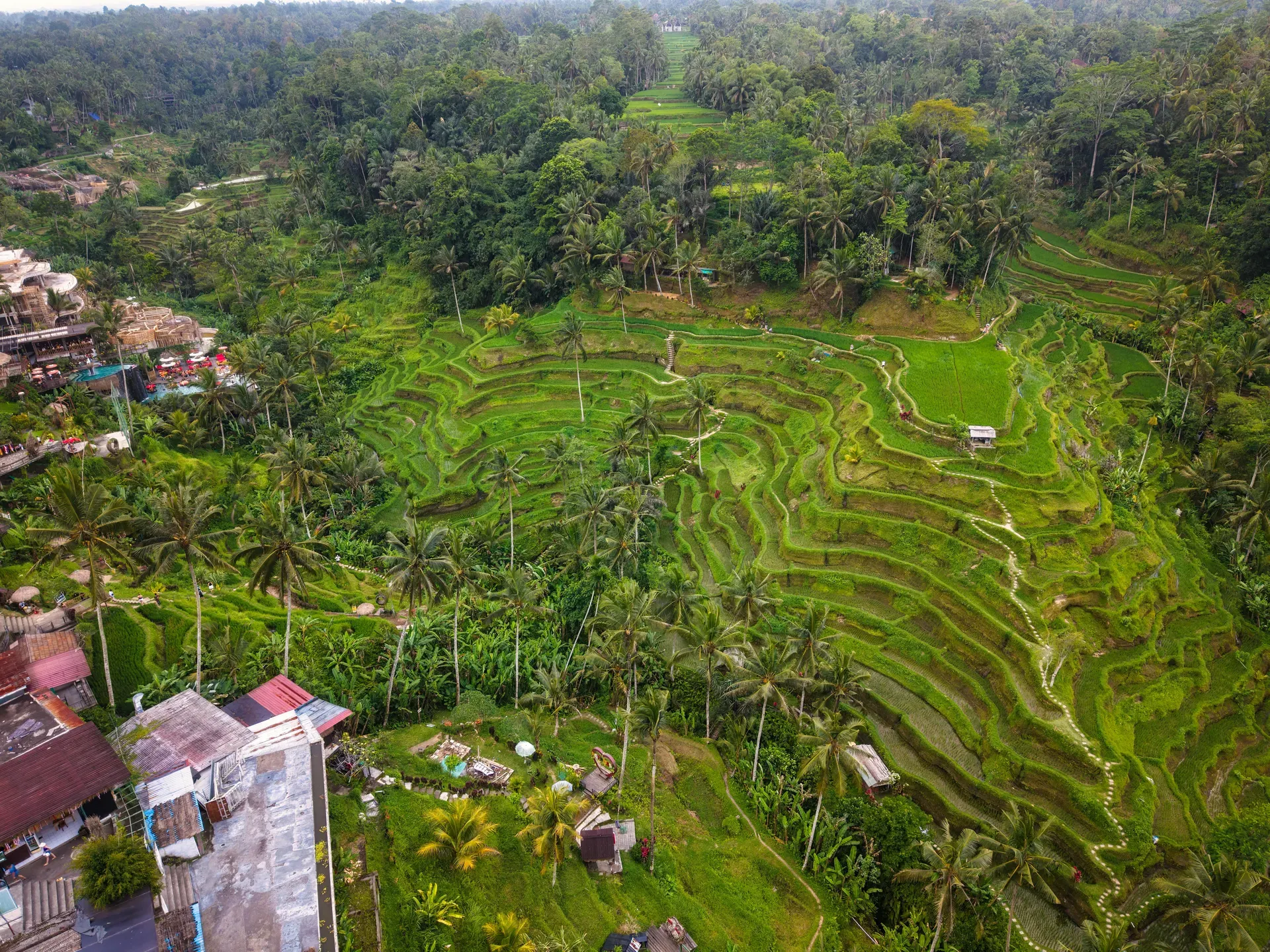
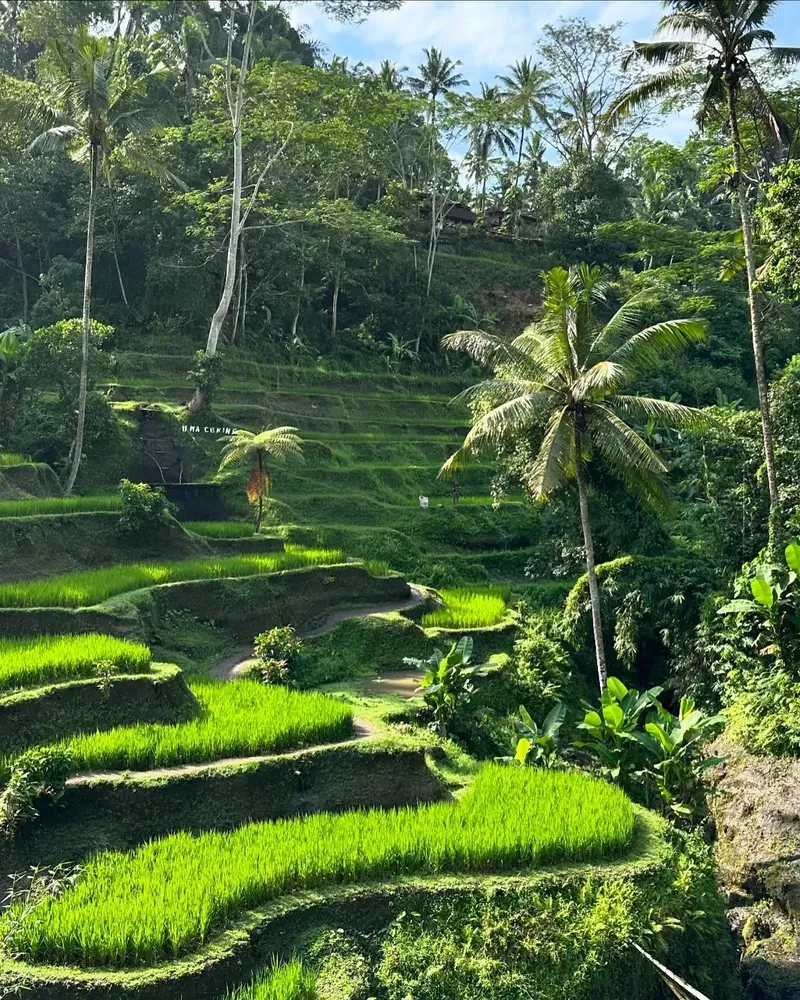
Maintained by local farmers for over 1,000 years, Tegallalang Rice Terrace features three primary levels of stepped paddies carved into a 600-meter-high valley. Visitors can walk the narrow dirt paths of this UNESCO World Heritage Site, located just nine kilometers north of Ubud, to observe the ancient subak irrigation system.
Find Guided ToursLocated 9 kilometers from Ubud at an elevation of approximately 600 meters, Tegallalang Rice Terrace is an agricultural landscape carved into the steep slopes of central Bali. The site features three primary levels of stepped rice paddies situated in a deep, narrow valley. From the main viewpoint, the terraces stretch about 600 meters along the west side of the Ceking valley, creating a dramatic hanging garden effect. Local farmers actively cultivate the fields, maintaining a working landscape connected by narrow dirt paths.
These complex multilevel structures evolved over a millennium from simple bladygrass gardens. Generations of farmers have manually built and maintained the terraces to maximize arable land on the steep valley walls. The foundation of this agricultural endurance is the subak irrigation system. Introduced by the revered sage Rsi Markandeya in the 8th or 9th century, this water management network relies on channels and bamboo pipes to distribute water evenly across the stepped fields.
In 2012, UNESCO designated the terraces as a World Heritage Site as part of the Cultural Landscape of Bali Province. The designation recognizes the profound cultural importance of the ancient subak system. Rather than acting solely as a method of farming, it operates as a physical manifestation of Tri Hita Karana. This traditional Balinese philosophy emphasizes the necessary harmony between the divine, the human world, and the natural environment.
Tegallalang remains a living testament to these ancient engineering and philosophical principles. The terraces have been functioning for over 1,000 years. Visitors to the valley today observe the exact same continuous cycle of planting, watering, and harvesting that has sustained the local population for centuries.
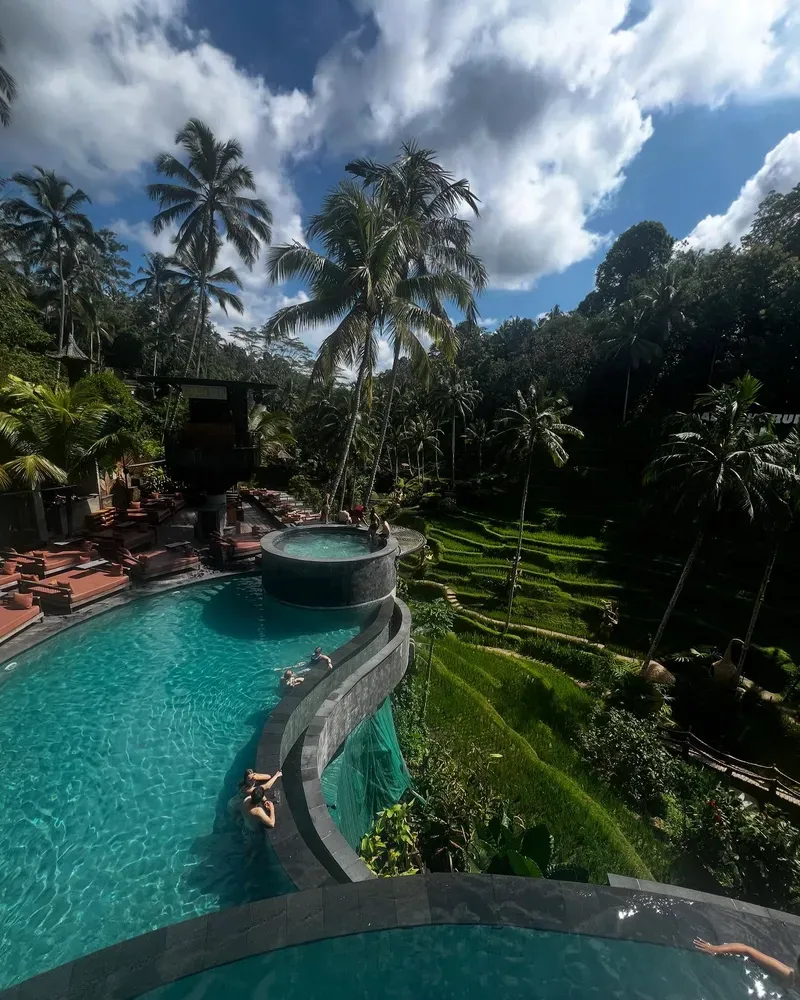
Discover the full history and cultural significance on our About page.
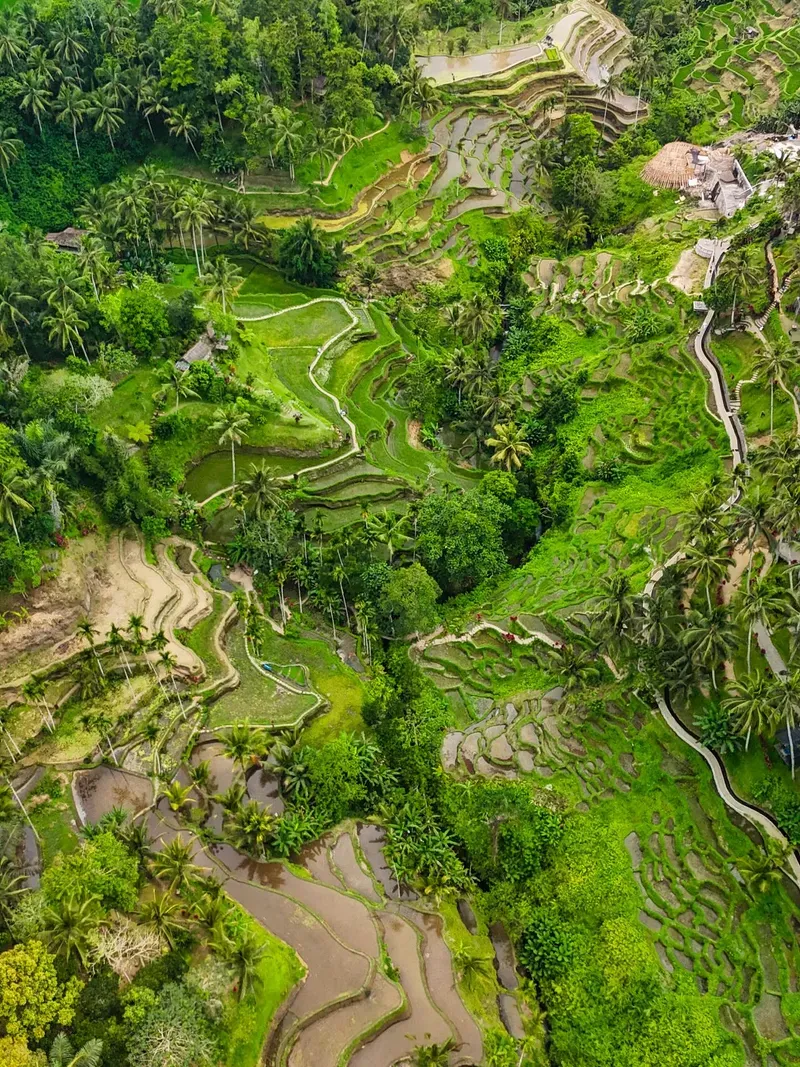
Examine the complex network of water channels and bamboo pipes that sustain the three primary terrace levels. Dating back to the 8th century, this UNESCO-listed agricultural method relies on gravity to distribute water. You can watch local farmers actively cultivating the 600-meter-high hillside using these traditional techniques.
Walk the narrow dirt paths connecting the terraced slopes. The main route stretches 600 meters along the Ceking valley's west side and involves a 1,000-foot elevation change. Negotiating these uneven stone steps requires sturdy shoes, but it provides a clear view of the agricultural scale from the valley floor.
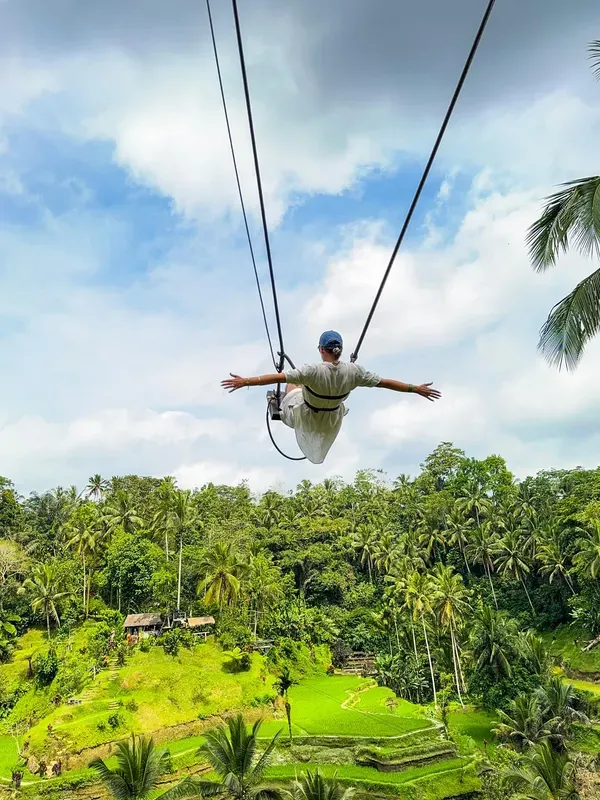
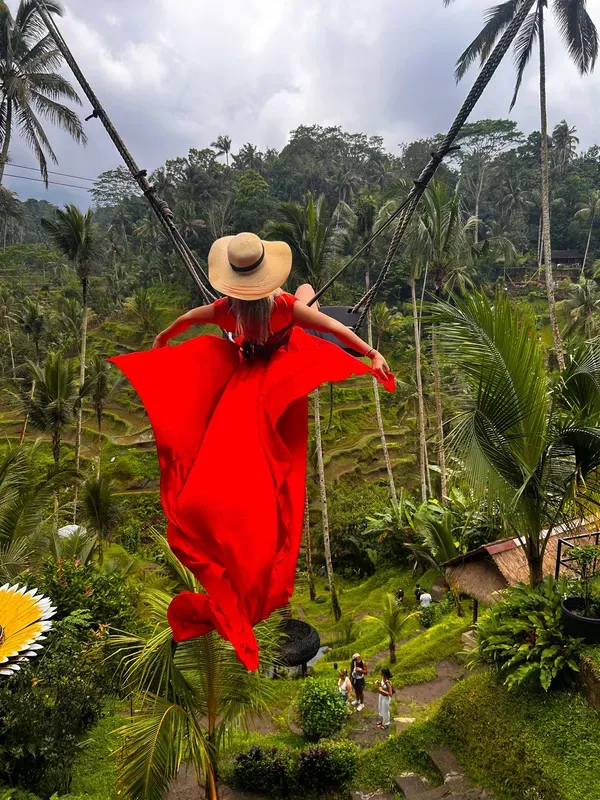
Swing out over the valley edge for an unobstructed view of the jungle canopy and steep paddies below. Several operators run these large swings along the ridge. Prices typically range from 150,000 to 350,000 IDR per person. The vantage point highlights the dramatic hillside drops.
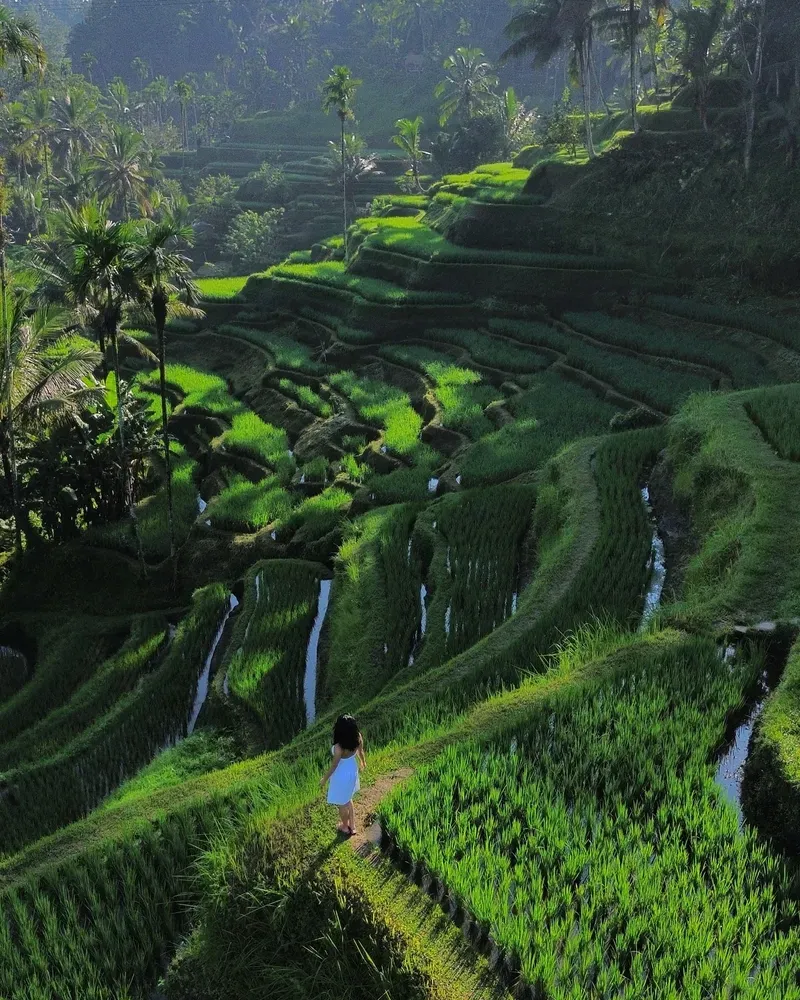
Arrive between 07:00 AM and 09:00 AM to watch the morning light filter through the palm trees into the misty valley. Visiting during these early hours keeps you ahead of the large tour buses that arrive after 10:00 AM. The temperature is also significantly cooler on the steep paths.
Hand-picked tours with free cancellation and verified reviews
 Free Cancellation
  Free Cancellation 10h
  Free Cancellation 3h
  Free Cancellation
  Free Cancellation 8h
  Free Cancellation
  Free Cancellation 10h
  Free Cancellation 10h
 The optimal time to visit Tegallalang Rice Terrace is during March, April, September, and October when the crops are at their greenest. Arrive early between 07:00 AM and 09:00 AM to avoid the midday heat and tour buses that arrive after 10:00 AM.
March and April rank among the top months to visit. The crops are at their greenest or turning golden-brown before harvest. May falls outside the primary recommended viewing window.
These months fall between the primary harvest cycles and the rainy season. Arrive early between 07:00 AM and 09:00 AM to beat the heat and the large tour buses.
September and October are optimal, showcasing green fields just before harvest. Conditions deteriorate rapidly in November as the rainy season begins, turning the steep clay-like soil extremely slick.
This period falls squarely in the rainy season. Heavy precipitation makes the steep dirt paths extremely muddy and slippery, complicating the 1,000-foot elevation changes across the three terrace levels.
Tegallalang Rice Terrace is open daily from 07:00 AM to 06:00 PM. Arriving between 07:00 AM and 09:00 AM is recommended to avoid the peak heat and the large tour buses that typically arrive after 10:00 AM.
| Category | Price |
|---|---|
| General Entry | 25,000 IDR |
No advance bookings are required. Tickets are purchased on-site and official booths only accept cash in Indonesian Rupiah. Visitors should carry small 5,000 and 10,000 IDR notes, as farmers customarily request minor donations (10,000 to 20,000 IDR) to cross private land along the trekking paths. Additional activities, such as swings and specific photo spots, cost between 10,000 IDR and 350,000 IDR.
For complete schedules and ticket prices, visit our Hours & Fees page.
Tegallalang Rice Terrace is located 9 kilometers north of Ubud Center. The site is easily accessible by road, though unpredictable traffic from South Bali can heavily influence travel times.
📍 Jalan Raya Tegallalang, Tegallalang Village
Renting a scooter provides the most flexible way to reach the terraces. Riders follow a straightforward route heading north out of Ubud Center directly along Jalan Raya Tegallalang. The 9-kilometer drive generally takes under half an hour in normal conditions. Upon arrival, designated roadside parking is available for 5,000 IDR.
Hiring a private driver is highly recommended for groups traveling from South Bali areas like Seminyak or Kuta. The 40-kilometer route typically takes up to two hours, but unpredictable traffic during peak hours can easily double this estimate. This option works exceptionally well for full-day itineraries. Drivers can easily combine the visit with nearby sites like Tirta Empul Temple. Roadside car parking costs 10,000 IDR.
Using applications like Grab or Gojek represents a convenient method for traveling the 9 kilometers from Ubud. Drivers can drop passengers directly at the main entry points along the valley ridge. However, securing a return trip from the site proves difficult. Local transport zone restrictions frequently prevent ride-hailing drivers from picking up passengers at the terraces. Visitors should plan alternative return transport in advance.
For detailed transport options and routes, visit our Directions page.
The site requires a 25,000 IDR cash entry fee, and credit cards are not accepted. As you trek through the valley, you will encounter multiple donation points on private farmland. Carry small 5,000 and 10,000 IDR notes for these crossings. A standard donation is 10,000 to 20,000 IDR, so refuse demands for excessive fees at bamboo bridges.
Navigating the terraces involves a 1,000-foot elevation change on narrow, uneven dirt paths without handrails. The clay-like soil becomes exceptionally slick with even mild moisture. Leave sandals behind and wear sturdy shoes with strong traction. If visiting during the rainy season from November to February, expect extremely muddy and slippery conditions.
Plan your visit between 07:00 AM and 09:00 AM. Early arrival helps you avoid the large tour buses that begin flooding the site after 10:00 AM. It also allows you to trek before the midday heat sets in. The valley floor is significantly hotter and more humid than the roadside ridge.
Unofficial individuals may approach you in the parking areas attempting to sell entry tickets. Bypass these aggressive vendors and only pay at the official booths. General admission is strictly 25,000 IDR and requires no advance booking. Roadside parking is also fixed at 5,000 IDR for scooters and 10,000 IDR for cars.
The main viewpoint stretches 600 meters along the Ceking valley and gets highly congested. For a quieter environment, walk to the far north end of the terraces around the Abian Desa area. This section sees far fewer tourists. It also features a flat, accessible viewpoint suitable for wheelchair users who cannot navigate the steep steps.
Always review the weather forecast before heading to Tegallalang. If heavy rain fell the night before, the lower valley paths often become completely impassable. The steep dirt trails turn into thick mud, making the descent dangerous. Stick to the upper ridge viewpoints if conditions look overly wet.
This sacred water temple serves as an active site for ritual purification. Visitors can observe local devotees or participate in the bathing ceremonies themselves. It provides a direct look into Balinese spiritual practices.
Known for its large koi ponds and maintained gardens, this water temple provides a quieter alternative to Tirta Empul. The grounds feature traditional architecture with significantly fewer crowds. It is ideal for visitors seeking a peaceful environment.
This wildlife sanctuary houses over 1,200 long-tailed macaques within a dense forest setting. The grounds also contain several ancient temple ruins. It functions as an active ecological reserve and a significant cultural site.
Read what travelers share about their experience visiting Tegallalang Rice Terrace — from practical tips to personal highlights.
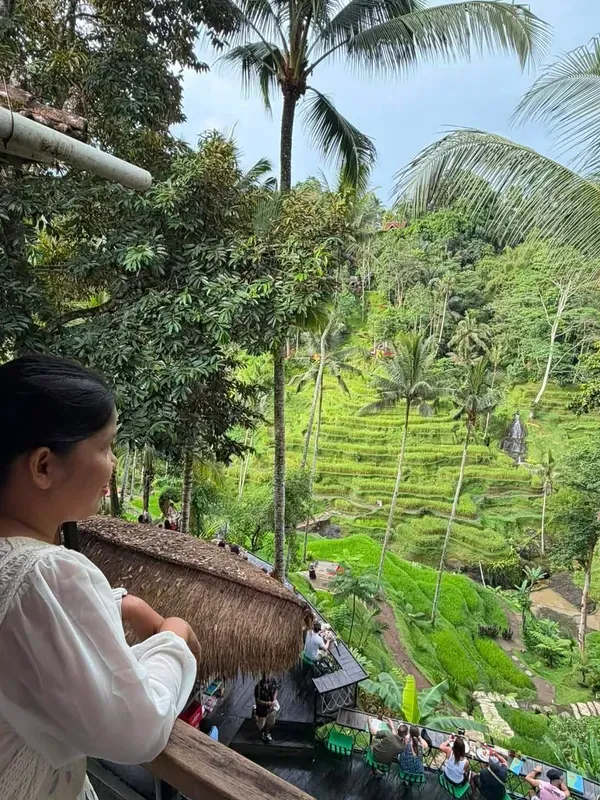
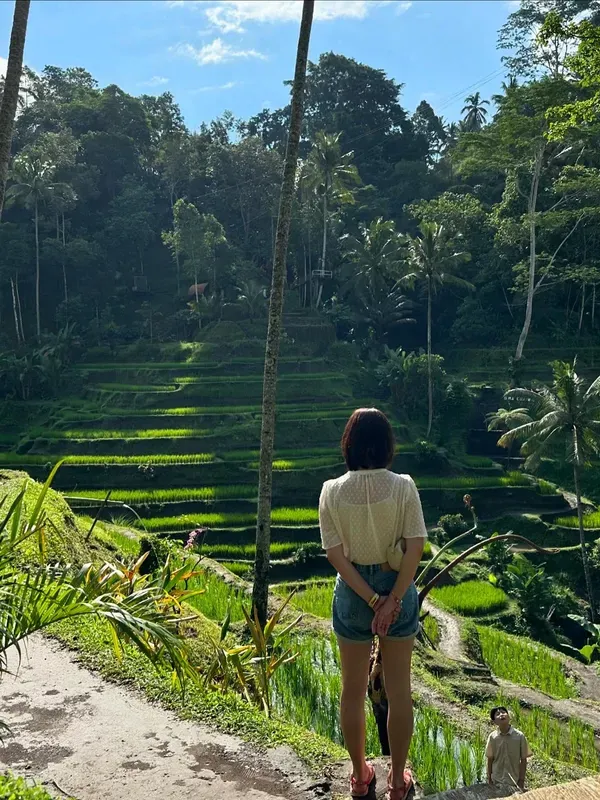
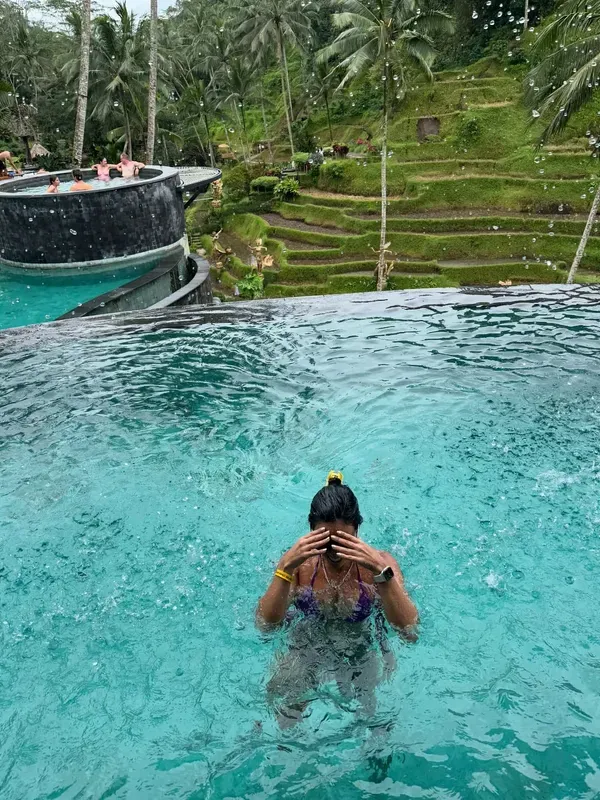

No advance booking is required. Visitors purchase tickets on-site at the official booths for 25,000 IDR. Ensure you bring cash, as the ticket counters and donation points do not accept credit cards.
Arrive between 07:00 AM and 09:00 AM to avoid the midday heat and large tour buses that begin arriving after 10:00 AM. The site is open daily from 07:00 AM to 06:00 PM. A typical visit lasts 1 to 1.5 hours.
The terraces change color depending on the agricultural cycle. They are at their greenest in March, April, September, and October just before harvest. Avoid visiting between November and February, as heavy rains turn the steep dirt paths into extremely slippery mud.
The terraces are located 9 km north of Ubud Center. You can drive a rental scooter via Jalan Raya Tegallalang in 20 to 25 minutes. Ride-hailing apps like Grab and Gojek cost between 30,000 and 50,000 IDR for a drop-off, though return pick-ups can be difficult due to local transport rules.
Light, breathable clothing and sturdy walking shoes with good grip are highly recommended. Unlike Balinese temples, there is no formal religious dress code requiring a sarong. Bring a reusable water bottle, as the valley floor is significantly hotter and more humid than the roadside ridge.
Beyond the 25,000 IDR entrance fee, carry small notes in 5,000 and 10,000 IDR denominations. Local farmers maintain the trails and often request small donations of 10,000 to 20,000 IDR when you cross their private land. If you plan to ride the Bali Swings, expect to pay an additional 150,000 to 350,000 IDR.
Wheelchair access is very limited inside the valley. The main trekking paths involve steep, narrow dirt trails and uneven stone steps with a 1,000-foot elevation change. However, visitors with mobility issues can still view the terraces from the flat roadside sidewalk or the accessible viewpoint at Abian Desa.
Yes, hiring a private car with a driver is the most practical option for the 40 km drive from South Bali. This costs between 500,000 and 650,000 IDR and takes 1.5 to 2 hours each way. Unpredictable traffic during peak hours can double your travel time, so plan accordingly.
Browse verified tours with free cancellation and instant confirmation.
Find Tours